

There’s a time for everything, the writer of Ecclesiastes insisted. A season for every activity. A time to be born and a time to die. A time to build and a time to tear down.
A time to grow, and a time to stop growing.
Wait, a time to stop growing? Not in economics there isn’t. It’s always and forever growth, as far as most economists are concerned. Resource depletion, soil exhaustion, climate change, pollution, none of these are good enough reasons to stop doing anything. All climate solutions are up for discussion except the ones that require us to stop doing something. Electric cars and renewable energy? Sure. Eating less meat, choosing not to fly? No thank you. Stopping is not on the table.
“Our society has no relationship with death and hence with finitude,” writes the German academic Harald Welzer. “This curious fact has a lot to do with the inability to stop which has increasingly shaped our cultural model since the rise of growth-based capitalism.”
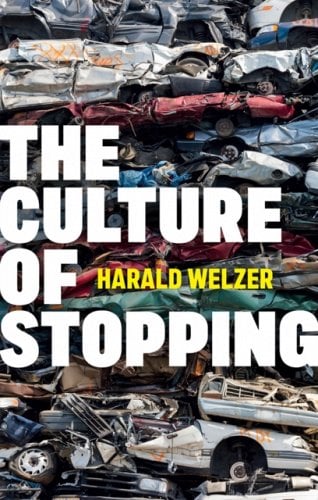
Welzer explores this idea in detail in his new book The Culture of Stopping, which was inspired by his own near-death experience after suffering a heart attack. In it, he suggests that “the fiction of endless progress based on endless business as usual needs to be dispelled by a culture capable of learning the art of stopping.”
This is an idea that I hadn’t come across before – that stopping is a learned skill. The book demonstrates that with a series of examples of professions where stopping is important. The list includes palliative care nurses, composers who need to bring a piece of music to a satisfying conclusion, mountaineers who need to recognise when to abort an expedition in the face of adverse weather, and many others.
Welzer is not a Christian and the book dismisses any sense of the afterlife, but it made me wonder if the church has something to add here. Many still look to the church for rites of passage events. Even if they don’t follow the faith themselves, they might still want the church to dignify and sanctify the key moments of a human life. That includes the end of a life, celebrated and committed to God in the business of a funeral.
That, in turn, reminded me of the arts collective that recently held a funeral for a coal power station in Appalachia. This wasn’t to celebrate its demise, and the clean air and lower carbon that would result. It was to recognise that coal had been meaningful to the community. It was a source of pride, of employment, and even identity. It’s right to mourn the loss of those things, and to honour what was good about that power station, however damaging it may have been in other ways.
I’m not sure my local parish priests would appreciate being called upon to organise a send off for people’s diesel SUVs or gas boilers. But I do wonder if the church has a role in helping people navigate endings. The end of particular industries and their infrastructure. The end of certain lifestyles and consumption patterns. The end of certain visions of the future. We want to talk about what comes next, about transformation and new ideas. At the same time, some things need to end.
As people who are aware of finitude, within a context of God’s eternal nature, perhaps we can help to shape a culture of stopping.
 Joy in Enough