
I often listen to podcasts while I’m walking down to my town centre workspace, or when out and about on errands. Although I’m careful with them and I try to buy quality, earphones don’t tend to last very long. Give them a couple of years and I usually find one side starts cutting out or going crackly, and then I need to replace them.
I learned to use a soldering iron and have tried repairing them in the past, with mixed results. I can repair a loose connection and get a bit more life out of them. Other times I can’t work out what’s broken, or there’s no way to take them apart and put them back together again. They’re not usually designed to be repaired.
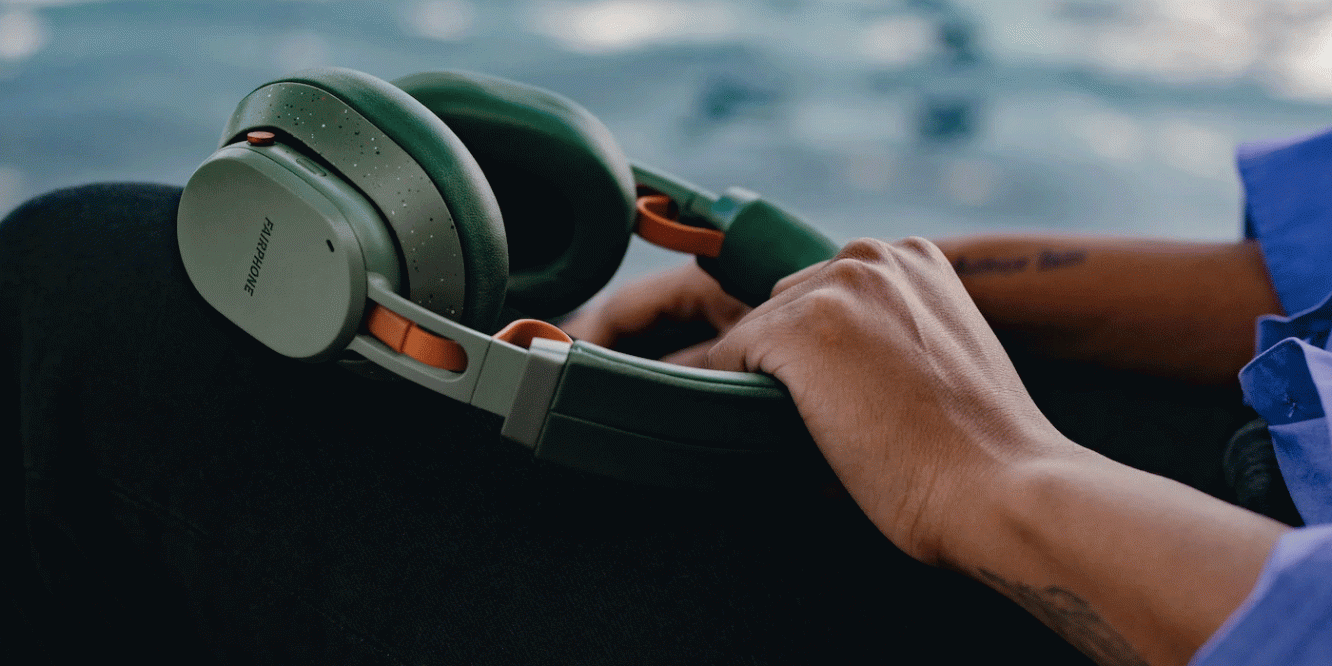
Here’s a pair of headphones that are. They’re from Fairphone, whose phone handsets even come with a tiny screwdriver so that you have no excuse for not having a go. Like their phones, these headphones are modular in design, making them easy to repair and reassemble.
Unlike the tiny sealed units that I can’t figure out when they go wrong, these headphones are admirably transparent in their construction:

There are eleven components here that will be available to buy as spare parts. If something snaps or wears out, you’ll be able to replace it. And if the company develop a better speaker or a lighter battery, you can upgrade.
Fairphone are pioneers of ethical supply chains in electronics, and that’s true here too. They use recycled plastics and aluminium, and these are the first headphones to include Fairtrade certified gold. A fair wage was guaranteed to everyone involved.
This doesn’t come cheap, though at £219 there are many more expensive headphones out there. But as Fairphone have consistently shown, electronic products are cheap for a reason, and the exploitation of global labour is hidden several layers deep when we come to buy the product itself. Better electronics are possible, and fair wages are possible. It just costs a bit more to do things properly.
Besides, perhaps it’s a matter of recalibrating what we consider to be expensive. Previous generations would have paid a lot more for a pair of headphones and expected them to last – I remember plugging in my Dad’s to listen to his old records, and they still sounded great twenty years on. If a pair of Fairphone headphones prove as repairable as the company claim, maybe they’ll still be in use in twenty years. That would be nearer in price to ten pairs of cheaper alternatives that lasted two years each, which makes the cost look much more reasonable.
For us at Joy in Enough, Fairphone’s headphones are most useful as a sign of what better electronics might look like. The electronics industry has exploited workers and been a poor steward of resources – “The wages of the workers who made your phone handsets are crying out against you,” to paraphrase James 5. Ending that exploitation doesn’t mean the end of electronics. It means better gadgets, fairer business models, design for durability. This is where consumerism needs to go as a whole, with fair pay in a circular economy.
It might be mean we have to save up for things, and repair them, but in return we would keep them for longer and come to appreciate them in new ways.
 Joy in Enough