
Mark Dick, a GP based in Northern Ireland and a member of the Joy in Enough enabling group, describes a better food system on the other side of crisis.
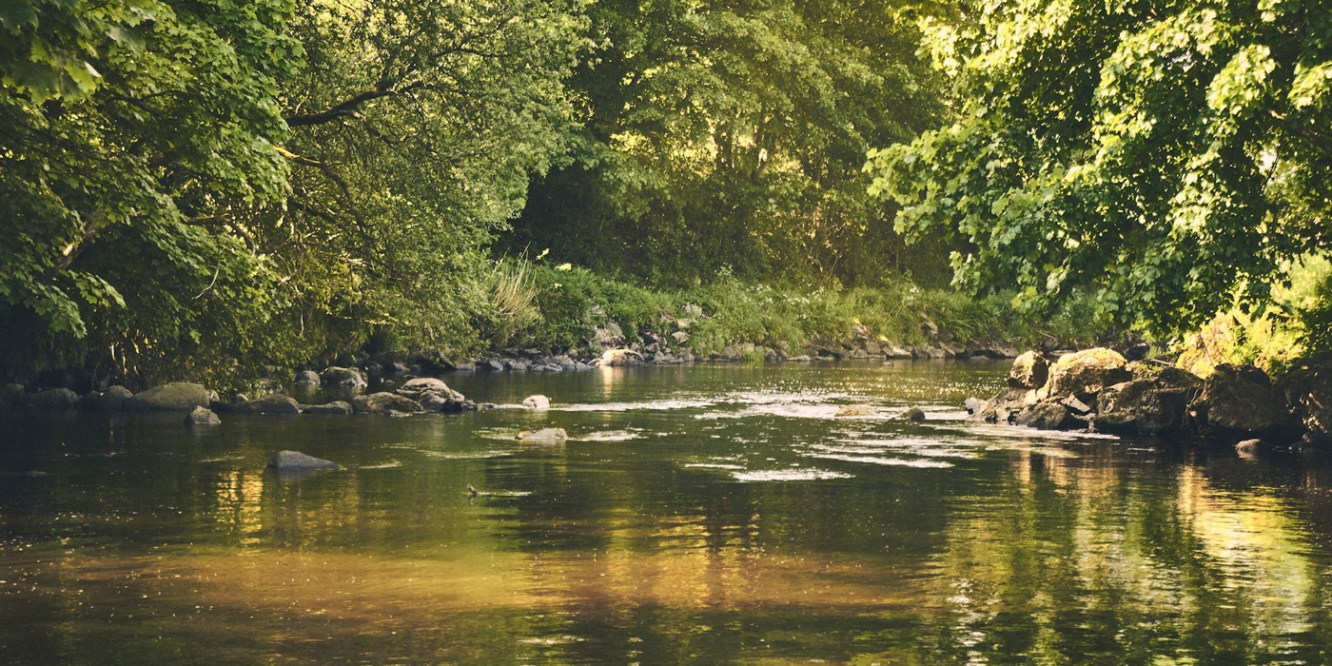
In the summer of 2023, blue-green algae (cyanobacteria) blooms in Northern Ireland’s Lough Neagh proliferated during the extremely warm weather of early June, and then spilled into the Lower Bann River system. Phosphate and nitrogen run-off from intensive farming, human and industrial waste and detergent use all aggravated the situation. It grew into a crisis, disrupting livelihoods and water-based activities across the region.
Lough Neagh is the largest freshwater lake in the UK, and supplies much of the region’s drinking water. The bloom of toxic algae in such a vital body of water became known as the cyanobacteria scandal.
Northern Ireland’s crisis echoes failures on river water quality elsewhere in the country. Rising pollution from industrial farming has combined with inadequate regulation and under-investment in wastewater treatment to create a perfect storm. But there’s more to the story, because it is a microcosm of a wider set of issues: pollution, industrial farming and laissez-faire government in a warming world.
So, what can we learn from the scandal? And how could we improve our food and farming systems to avoid this kind of pollution in future?
Responding to the climate and ecological crisis will of course require urgent action across many areas of policy making. In relation to agriculture and food production, the most important question is how to feed eight billion people sustainably?
Part of the answer surely must be a mainly plant-based diet for everyone. Above ground leafy veg is nutritious and healthy. Below ground veg is mostly starch and so is less good for diabetes, cancer, obesity etc. We should also caution against grains and seed oils that are not the correct fuels for ancestral metabolism – they are highly processed. Yet in some parts of the world this is already the norm.
What should happen in government policy terms? Any food subsidies should be directed towards making fruit and vegetables are as cheap as possible within the confines of being locally produced and in season. A carbon tax on all other foods would reflect the true cost of production.
During the transition to a new subsidy regime, farmers should retain their current level (or even an enhanced level) of support as was historically the case via the Common Agricultural Policy. If this means in effect paying some farmers not to work or rather completely change their practices to de-stock and rewild land, thereby drawing down more CO2 and emitting less methane, then this will be a useful contribution to degrowth/sustainability/system change.
In Northern Ireland, the Department of the Environment, Agriculture and Rural Affairs (DEARA) have estimated that milk production has increased by 92% since 1990, with much greater milk yield per cow. There has also been a 15% increase in the number of cows. At the same time, it is estimated that the number of farms growing potatoes in Northern Ireland has decreased from 3,000 to 400 approximately. This direction of travel is unsustainable, and other countries have already been discussing targets to reduce livestock numbers, including the Republic of Ireland.
Agriculture’s role in combating the climate and ecological crisis will involve reducing food waste, more arable farming where appropriate, reducing animal numbers on the land, less use of artificial fertilizers, using animal waste as biomass fuels, the restoration of peatbogs, rewilding, the planting of many trees and looking at the bigger picture of a global water and food policy. We will look at some of these in future articles.
- Mark is the author of Towards Oikos: A revalued perspective on global inequality and global warming
 Joy in Enough