
By Damian J. Hursey
It seems a while ago now, but I thought I would share with you some reflections on the Soul Rewilding retreat, at Hilfield Friary, ‘Reconnecting to the Divine in Nature.’ with Mike Mullins and Jonathan Herbert, that I wrote about back in late July.

The Solar Panels and Hemp Cladding on the Chapel at Hilfield Friary – where they practice what they preach in terms of the relationship between ecology, community and economics
A group of fellow retreatants gathered in Juniper House at Hilfield, (which I described in my July post) all of us concerned about the ecological crisis, disillusioned to some extent to how society and economics are responding – and wanting to find resources, both within ourselves and our faith to respond.
There was also a feeling that the church and Christian culture didn’t always ‘get the need’ for a new approach to the natural world, and the way we run the economy in particular.
Although it’s a generalisation, I shared how Christianity doesn’t always have the best reputation, historically, in terms of its perspective on the ecology and the natural world.
Firstly, the mandate in Genesis, ‘to fill the earth and subdue it’ has been seen by some as a rationale or justification, for environmental exploitation.
Secondly, the western focus post the reformation on individual piety and salvation, led to the fate of creation being seen as merely a backdrop to the great drama of souls being saved.
Thirdly, (an incorrect) assumption about certain biblical terms – ‘the flesh’ is inherently bad, and ‘the world’ and ‘wordly things’ are sinful, and spiritual, heavenly (and therefore immaterial) things are good.
Fourthly, particularly in some more literal understandings, the end of the world being seen as a good thing – as this would inaugurate the final judgement, and Christ’s return. Ecological destruction, could therefore be seen (perversely) as beneficial, if it hastened this return.
However, this is very far from being the complete picture. A key quote in the Soul-wilding retreat guide, for example, was from the American naturalist John Muir:
‘The world we are told was made especially for man – a presumption not supported by the facts. A numerous class of men are painfully astonished wherever they find anything living or dead in all God’s universe that they cannot eat or render in some way what they call useful to themselves’
And – of course – in the wonderful bio-diverse surroundings of Hilfield friary, it was difficult for us not to be reminded of the teachings of St Francis, who taught kinship for humanity with nature under God, rather than lordship over it. This is most memorably embodied in the Canticle of the Sun, or of the Creatures:
Canticle of the Creatures
Most High, all-powerful, good Lord,
Yours are the praises, the glory, and the honour, and all blessing.
To You alone, Most High, do they belong,
and no human is worthy to mention Your name.
Praised be You, my Lord, with all Your creatures,
especially Sir Brother Sun,
Who is the day and through whom You give us light.
And he is beautiful and radiant with great splendour;
and bears a likeness of You, Most High One.
Praised be You, my Lord, through Sister Moon and the stars,
in heaven You formed them clear and precious and beautiful.
Praised be You, my Lord, through Brother Wind,
and through the air, cloudy and serene, and every kind of weather,
through whom You give sustenance to Your creatures.
Praised be You, my Lord, through Sister Water,
who is very useful and humble and precious and chaste.
Praised be You, my Lord, through Brother Fire,
through whom You light the night,
and he is beautiful and playful and robust and strong.
Praised be You, my Lord, through our Sister Mother Earth,
who sustains and governs us,
and who produces various fruit with coloured flowers and herbs.
Praised be You, my Lord, through those who give pardon for Your
love, and bear infirmity and tribulation.
Blessed are those who endure in peace
for by You, Most High, shall they be crowned.
Praised be You, my Lord, through our Sister Bodily Death,
from whom no one living can escape.
Woe to those who die in mortal sin.
Blessed are those whom death will find in Your most holy will,
for the second death shall do them no harm.
Praise and bless my Lord and give Him thanks
and serve Him with great humility.
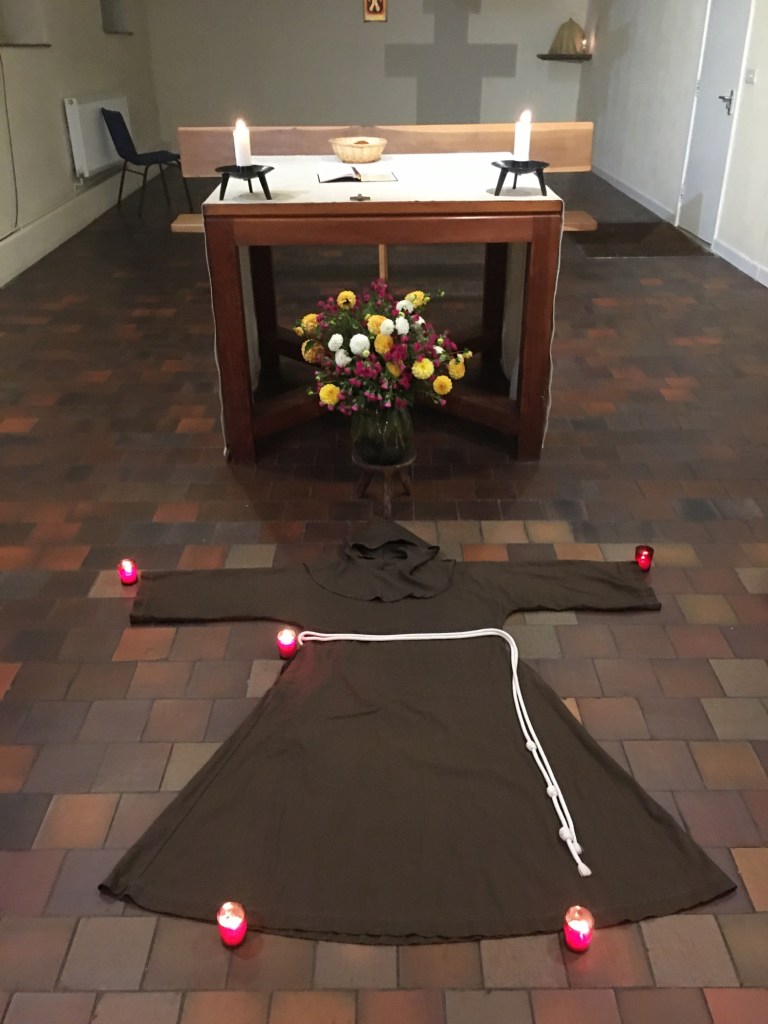
Picture: The Transitus of St Francis
Both the Muir quote and the St Francis Homily, point up our understanding of the purpose of the economy and economic activity – which it often isn’t realised – have their origins in theological understandings and spiritual motivations.
Most famously, the sociologist Max Weber drew the connection between the evolution of modern capitalism and Calvinism, whereby one’s salvation was demonstrated outwardly to the community by conspicuous capital generating activity (virtuous industry), but not conspicuous consumption, which would have been seen as ‘worldly.’ Thus, for Weber, the consequence of a theological understanding of a pre-chosen Elect, led to a paradoxical emphasis on good works as the evidence of election, and chosenness by God, while the need to appear thrifty and hard-working generated the surpluses necessary to kick start capitalism.
But Muir and St Francis, in different ways, react against the idea that everything has been created by God only for humanity – that by contrast – many, if not most things are made by God for themselves. In other words, they have intrinsic, not extrinsic, value. Another necessary step in the development of capitalism was the way in which instrumental reason (the belief that things have chiefly extrinsic value) became embedded in economics, justifying national and colonial expansion. A Post-Growth spirituality then, it could be argued, must envision an understanding of nature where things are valued for their own sake.
Four Narratives we explored
In the poignant surroundings of the Friary cemetery therefore, we explored four ‘narratives’ representing different ways of thinking about the environmental crisis. These were ‘Business as usual’, ‘The Great Unravelling’, ‘The Great Turning’ and ‘its Too Late – Deep Adaption.’
‘Business as Usual’ we might describe as the dominant narrative of Western society – one of economic growth at all costs, no matter the consequences for the natural world.
I was surprised how much a part of me identified with the ‘Business as Usual’ narrative, but perhaps it should not be surprising, considering how its ideas are continually reinforced through the media, advertising, news papers, social media, and politicians.
The promise is one of material plenty, of consumerism leading to a place of personal satisfaction and fulfilment. ‘Be a good boy or girl’ , – work hard at school, college, university, in the workplace, and you will be rewarded with nice things, a house, car, and lots of plastic moulded into various useful, or entertaining shapes, 2.3 children etc.
It’s true, economic growth has brought benefits to millions of ordinary people, and many people to appear to identify with the associated fruits of consumerism. (People do seem to like their 40 inch widescreen TVs, Xboxes, their SUV Audis and BMWs.) Yet the plenty of a few is bound up with the deprivation of many more, in less fortune parts of the globe.
It must be admitted, however, that the ‘social contract’ embodied by this narrative is broken for a large number of people, even in Western societies. Without access to ‘bank of mum and dad’, it is very difficult for young people to be able to afford their own home. Work is often precarious, with temporary contracts and low paid work. Hard work doesn’t always lead to material rewards, and for those it does, there can be very little time to enjoy them.
‘The Great Unraveling’ is a term that originates with Miller and Heinberg, describing how the process of economic expansion that accelerated in the 20 Century – fueled by fossil fuels – is petering out, and the world is left with polycrisis: ‘tangles of global environmental and social dilemmas that are accumulating, mutually interacting, and worsening;. The Great Unraveling therefore is ‘a time of consequences in which individual impacts are compounding to threaten the very environmental and social systems that support modern human civilization.’
For me, the Great Unraveling was a little on the pessimistic side. We must remember, as Michael Man has recognised, that ‘Doomism’ is effective as Denialism in demotivating activists, and therefore is promoted by various ‘bad actors’ who want to delay action on climate. I identified more with ‘The Great Turning’, a narrative based upon the work of Joanne Macy, ‘a shift from the Industrial Growth Society to a life-sustaining civilization.’ Similarly to the work of Kate Raworth, it promotes the idea that human needs can be met within environmental limits, however, this is not compatible with perpetual economic growth of the Industrial Growth Society. I identified least with the ‘it’s too late – Deep Adaptation’ story. For me it feels too soon to throw in the towel. Also, to me, it seems a not particularly joyful story, involving the suffering of many people.

The most profound aspect of the retreat for me, however, was when Mike led us around the friary grounds, with different sections of the site representing different phases in the ages of the Earth. For me, reflecting upon the mind boggling age of the planet, we all share with so many beautiful varied creatures, was both a salutary and enlightening experience, as Mike put it, ‘Not Eternity but Like Eternity.’ I mentioned to Mike that his presentation reminded me of a section of the Terrance Malick film ‘Tree of Life.’ This is a beautiful and spectacular sequence that segues from Nicole Kidman’s character praying from Job, with the verse, ‘Where were you…while the morning stars sang together and all the angels shouted for joy? – into an extraordinary depiction of the evolution of the universe and the planet, and life’s development. I certainly haven’t squared the evolution/creation circle, but I suspect that might be the point. We can’t fully understand, we can only try to apprehend, and wonder.
I suffer from a chronic health condition called Fibromyalgia, which was causing me some aggravation on the retreat, after a week’s very intense gardening. (I tend to get a delayed effect after too much physical exertion that causes pain in the muscles in my body.) Towards the end of the retreat, I wandered into Hilfield’s ‘Secret Garden. Seeking solitude I lay on a bench in one section of the garden looking up at the exotic trees and plants, it all felt prehistoric. In Job like fashion, I complained to God about various frustrating aspects of how my body was functioning. Of course, it could have been my imagination, but God seemed to say something like: ‘Think about all the coincidences, the lives and deaths of millions of creatures and evolutionary processes, stretched out over countless eons that it took to make the unique organism that is you, and you’re worried about your body not working quite right.’
An an admonishment, perhaps, but also an affirmation? Perhaps, reconnecting with the Divine in nature is an extrinsic part of Joy in Enough.
……………………………………
“Reconnecting to the divine in nature” is a three-day retreat geared at Christians enquiring into the place of nature, creation and eco-spirituality in their faith. It has four aims:
· To help participants develop a deeper connection to and love for the sacredness of nature as an expression of the divine
· To honestly face the environmental crisis with hope, courage and a sense of personal agency.
· Become part of a wider movement for positive, regenerative change in our society
· Learn to know, honour and protect mother earth, allowing all life to flourish.
Running at Hilfield Friary, Dorset, on May 9th – 11th and again on June 27th – 29th 2025, the retreat will immerse participants in the beauty of God’s creation – slowing us down to nature’s pace. Providing time for reflection, meditation, prayer and stillness inspired by nature. It will draw upon scripture, mystics, the principles of Joanna Macy’s “Active Hope”, as well as earth sciences and evolutionary biology. Further information at https://www.soulrewilding.co.uk/
To book a place on the retreat please contact Mike Mullins at mikemullins@soulrewilding.co.uk
 Joy in Enough