
Below are some pictures of a spot of wild swimming a few weekends ago. Owing to a lack of transport, I couldn’t reach my usual swim spot, in the Lugg, just outside Hereford, and so had to improvise. (I would heartily recommend the Lugg as a swim spot in this location, by the way, over the marsh fields).
Fortunately, my partner in crime ( though actually Trespass is not a crime but a civil offence, and actually not even that, because the act of simply being somewhere can not be made wrong under the Common Law), espied a stream by the Tesco garage at the roundabout that leads out of Hereford, and we followed down a fairly short way to where the stream was just big enough, to well, not swim, exactly, but to have a rather capacious bath in the cold water.
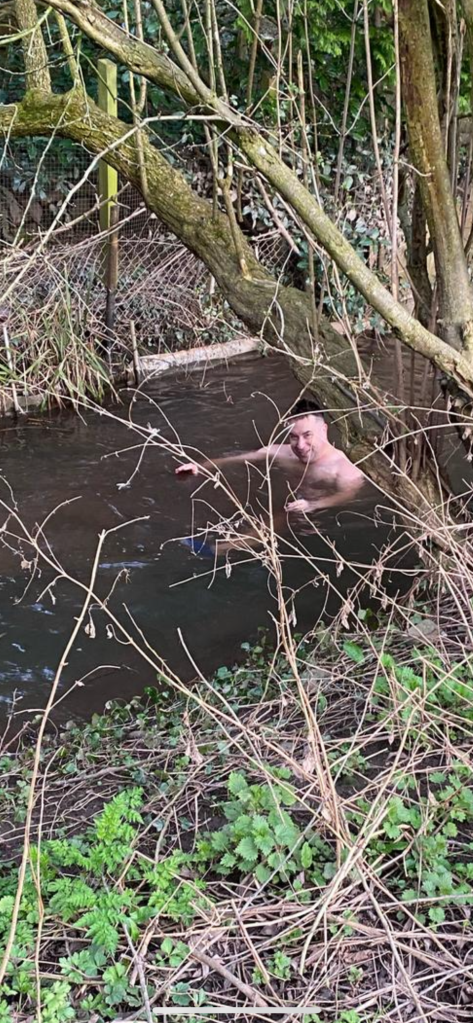
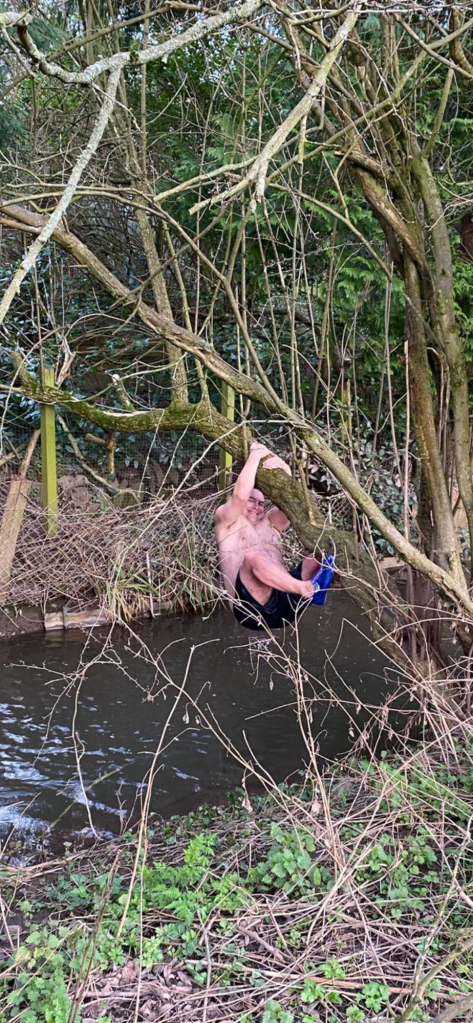
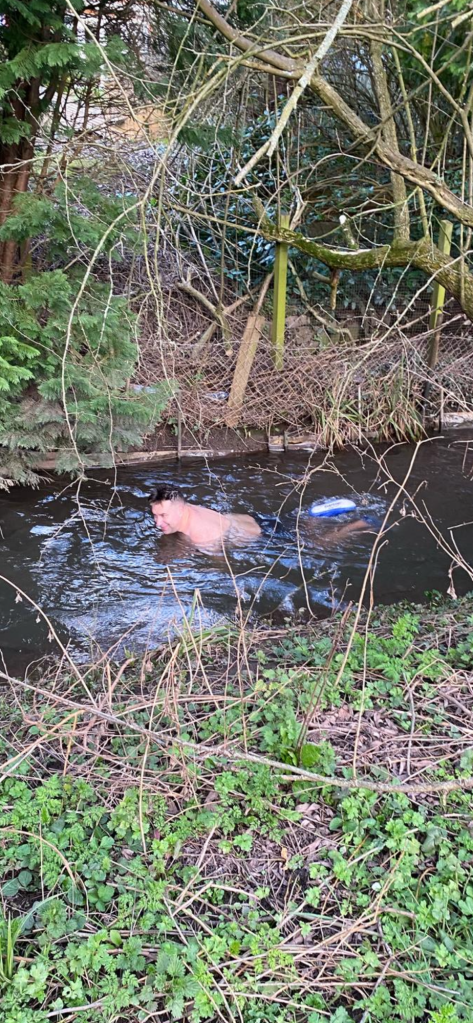
I am a big fan of wild and (fairly) cold swimming, partly because it can help with the symptoms of fibromyalgia, from which I suffer – but I have always enjoyed an outdoor dip, and not just at the seaside!
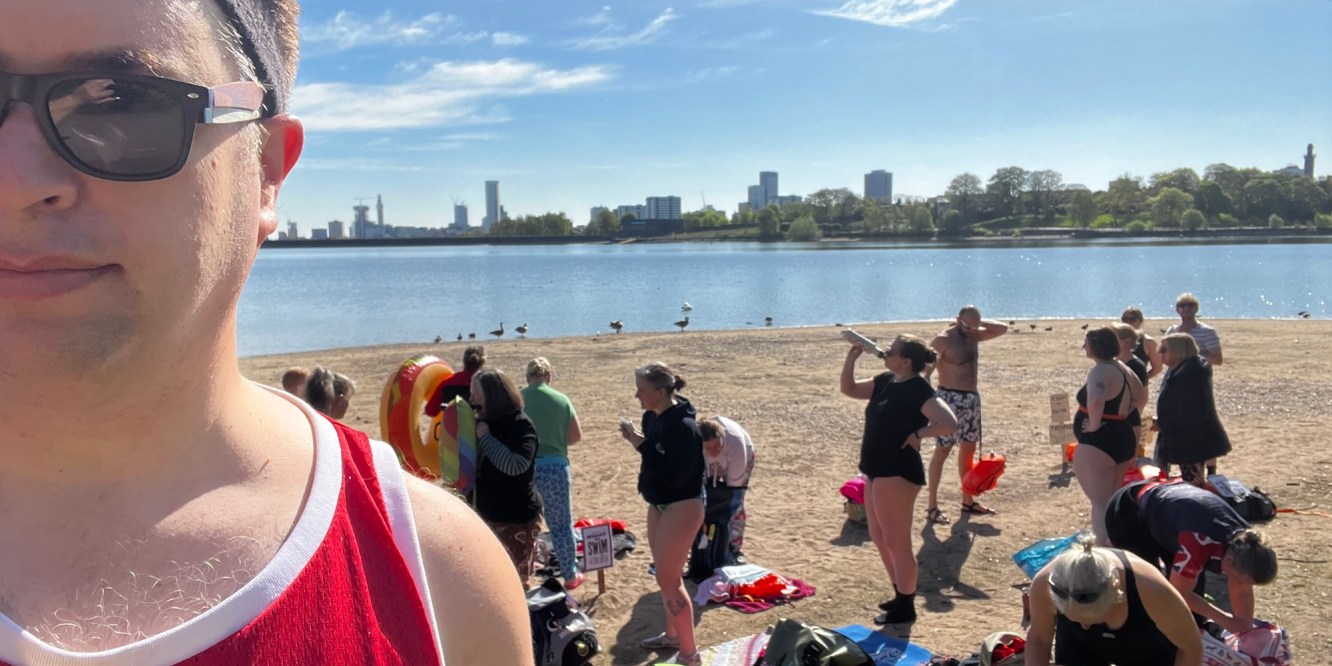
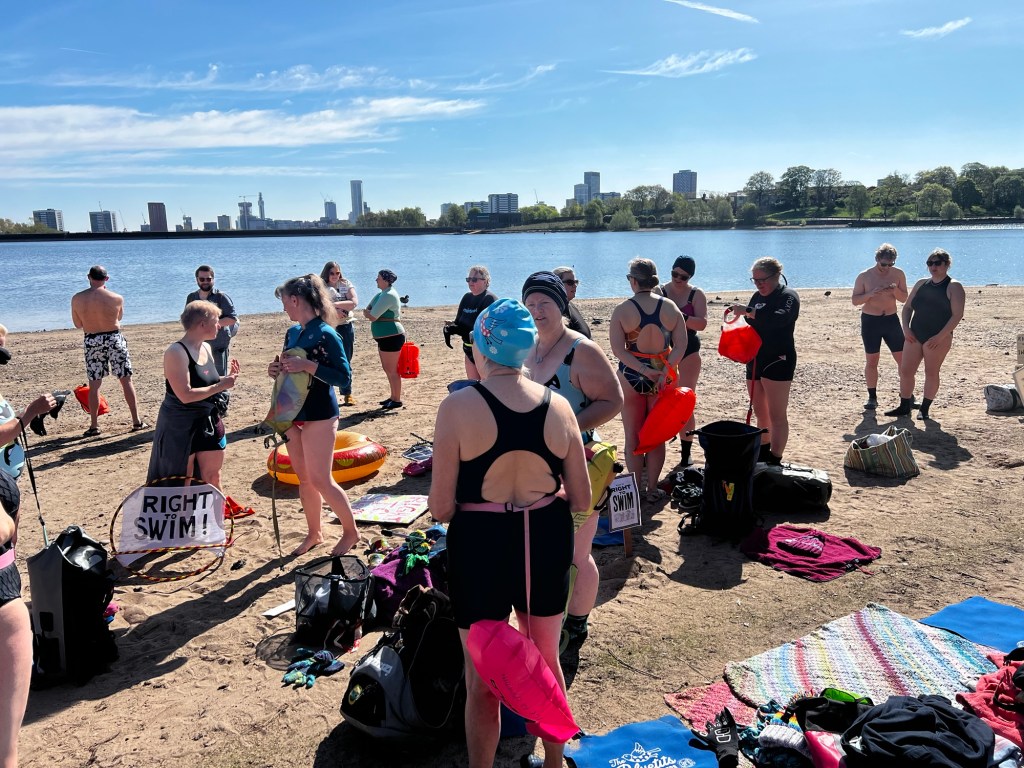
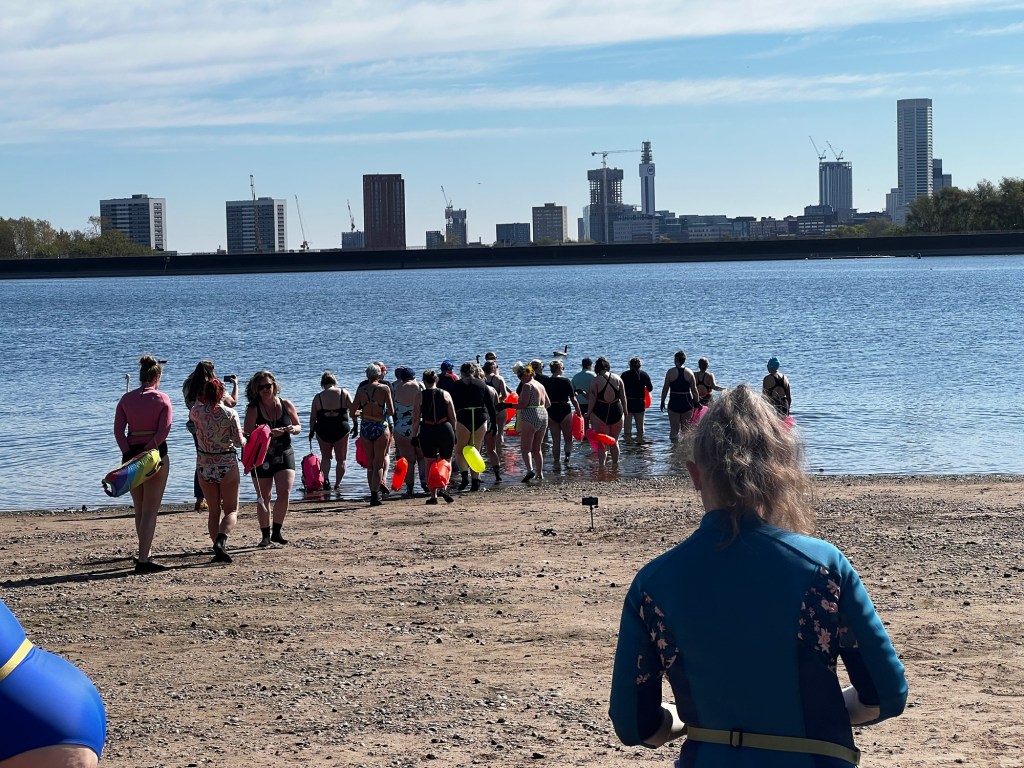
I think partly it is the transgressive, perhaps one should say, tress-passive element of outdoor swimming that appeals to me, so I was VERY pleased on Sunday to join in with a mass Trespass Swim in Edgbaston reservoir today, organised by the Birmingham Blue Tits cold water swimmers, inspired by the mass Kinder Trespass in 1932. This was a famous ‘invasion’ of Kinder Scout in the Peak District by working men from the surrounding industrial cities, who were protesting at the way many parts of the countryside had been enclosed, and access denied to ordinary members of the public. The men were arrested not for Trespass, but for affray and unlawful assembly, but the trespass arguably led in part to the (limited) Right to Roam we enjoy to day
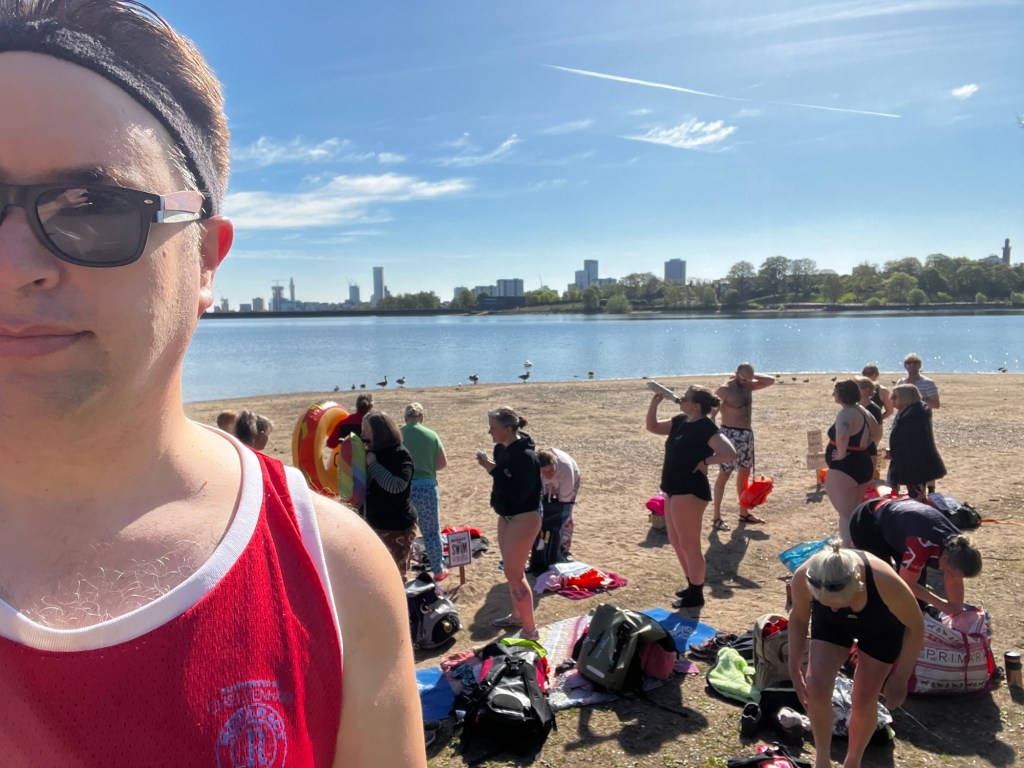
The swim was a wonderful experience, with extraordinary warm weather and completely clear blue skies. The only opposition we encountered was from a man who drove a speed boat up and down around the area in which we were swimming, in a manner far more disruptive than anything we were doing, which was to show how wild swimming can be done safely, enjoyable, and in harmony with other users of the water.
In The Book of Trespass Nick Hayes, explores via various ‘Tresspasses’ he undertakes, the history of land enclosure in this country, and exposes how current day land ownership in England is to a large extent a result of acts of land enclosure in the past. Although sanctioned by laws of Parliament, these acts were often enforced by violence, and forced common people off the land, denying them their ancestral land rights. This pattern continued in the English colonies, but it started in England.
The legacy continues today with only 8% of the countryside of England being accessible to the public. In particular he points up the ridiculousness of ‘owning’ water where in Land Law defines water as a ‘species of land’ whereas we know water goes wherever it wants, whenever it can. Does a flowing river’s water belong to someone new as soon as it passes into their land?
When we see a sign saying ‘Swimming Prohibited’ there may be a good reason for it, but equally it is worth querying- why exactly are we not allowed to walk, swim, cycle, camp or canoe here, and why is fishing and sailing allowed, but not swimming or canoeing?
Often the answer boils down to because some one in the past said ‘because I said so’ and ‘I’m richer and more powerful than you so what I say is law’ And because many people feel they have to abide by ‘the rules’ this often goes unchallenged.
But it is arguably this arbitrary aspect of the law that really should be challenged, as the tendency of the powerful to capture more and more resources will go unchecked and else we will find fewer and fewer things we are allowed to do, and places we are able to go. The law is often not neutral as it should be, but serves the interests of the rich, if only because they can pay for more expensive lawyers.
The economic aspect of this, of course, is that swimming outside in the sunshine (wind or rain. Or sometimes Snow. Yikes!) is free, and a non-consumption based activity. If we’re freely enjoying nature, then we can’t all be Good Consumers at home ordering plastic tat off Amazon, or out and about in a shopping mall on Sunday. And this is not a coincidence- a core strategy of capitalism is to capture a particular freely available resource’ – say with Facebook – the desire to relate to each other – and sell it back to us, or alternatively, us to advertisers!
Contrastingly, you don’t have read very much of The Bible to see how Christian spirituality encourages us to share what we have, and challenge those who take more than their fair share, especially at the expense of the poor – we just need to look at the life of the sadly lost Pope Francis to see how Christian spirituality resonates with people when it does this, and fails to do so when it loses sight of it.
By Damian J. Hursey
 Joy in Enough