
We had a heat pump installed in the house earlier this year. With frost on the ground yesterday, it’s been tested in lower temperatures for the first time and is doing just fine. The house is warm and maintaining a steady temperature, and we’re spending less on energy than we did with the gas boiler.
With the heat pump in and running on electricity, the remaining gas infrastructure in the house is obsolete. Not that there’s much of it left. There are some pipes in the walls and under the floorboards that ran to a gas fire in the living room, and the capped grid connection in the meter cupboard. Otherwise it’s all invisible. The transition to clean energy is complete.
This is the second transition to a new heating system that our house has undergone, and you can see the obsolete infrastructure for the first one too. That would be the big chimney breasts that run through the house. When it was built in 1928 it was heated with coal fires that burned in two fireplaces downstairs and smaller grates upstairs. These have been blocked off for decades, rendered unnecessary by the installation of gas central heating.

t would have been a hugely disruptive process. The gas engineers would have needed to dig up the road to lay the gas mains in the first place, with trenches dug across the front of every house on the street to install domestic gas lines. Inside the house, the previous occupier would need to have a gas meter installed by the front door. To make use of this new power source they had to find space for a boiler and a large hot water tank. Radiators were fitted in every room, with holes drilled through the walls and ceilings to run flow and return pipes throughout the building. I’m glad I missed all of that. The heat pump install was painless by comparison.
This disruption was repeated up and down the street as all the neighbours upgraded to central heating. It happened everywhere else too, bit by bit, across the entire country. Almost nobody burns coal to keep warm any more. Where they do it’s by choice, and in Luton it’s not permitted because the nearby airport needs tight controls on smoke.
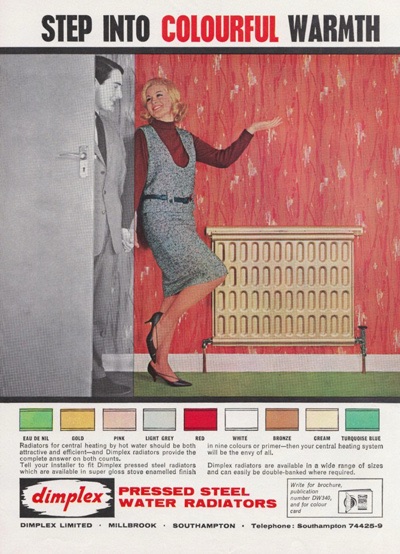
The nationwide transition to central heating was slow. It took decades to install the gas grid in towns, originally using coal gas to run street lights. The discovery of gas in the North Sea drove the national commitment to switch to gas as the dominant heat source, and central heating became the new standard. Adverts from the time show central heating as aspirational and you could even get brightly coloured radiators that drew attention to your heating system – good luck getting anything other than white today. It took time, but eventually 90% of British homes moved onto gas and benefits of warmer homes and lower air pollution.
Last week at work we had a presentation from a director of the Heat Pump Federation, Bean Beanland, and he told this story to put heat pumps into context. There’s a lot of bad press about heat pumps at the moment: they’re too expensive, they’re too disruptive, they don’t work. All of these gripes circulated during the transition to gas central heating, and before that during the major national upgrade to indoor plumbing. There were hold-outs, conspiracies and contrarians.
There was industry push-back too, and appeals to tradition, nationalism and jobs as reasons to stick with coal. There were new habits to adjust to. For example, oral histories of the transition show how people missed the way that families gathered around a fireplace. Once the whole house was heated there was little reason to be together in the same room, and that was a cultural shift experienced across a generation.
The transition to clean heating technologies may be disruptive, and might at times look unaffordable. But history shows us that we’ve done it before. We didn’t give up. We didn’t throw our hands up and declare it
impossible and not worth the effort, and everybody benefitted from new levels of comfort and health.
If our grandparents did it, we can too.
By Jeremy Williams
This blog was previously posted on the Earthbound Report
 Joy in Enough