
How do we move from checking boxes for an award to nurturing a deeper, more joyful faith through our ecological efforts?
At All Saints Church, Kings Heath our journey toward the Eco Church Silver Award from A Rocha is about a plan to take action – but also about what we believe about how we should utilise the resources of the church (building and people), at our disposal, in service of the preservation of the small part of creation we have responsibility for.
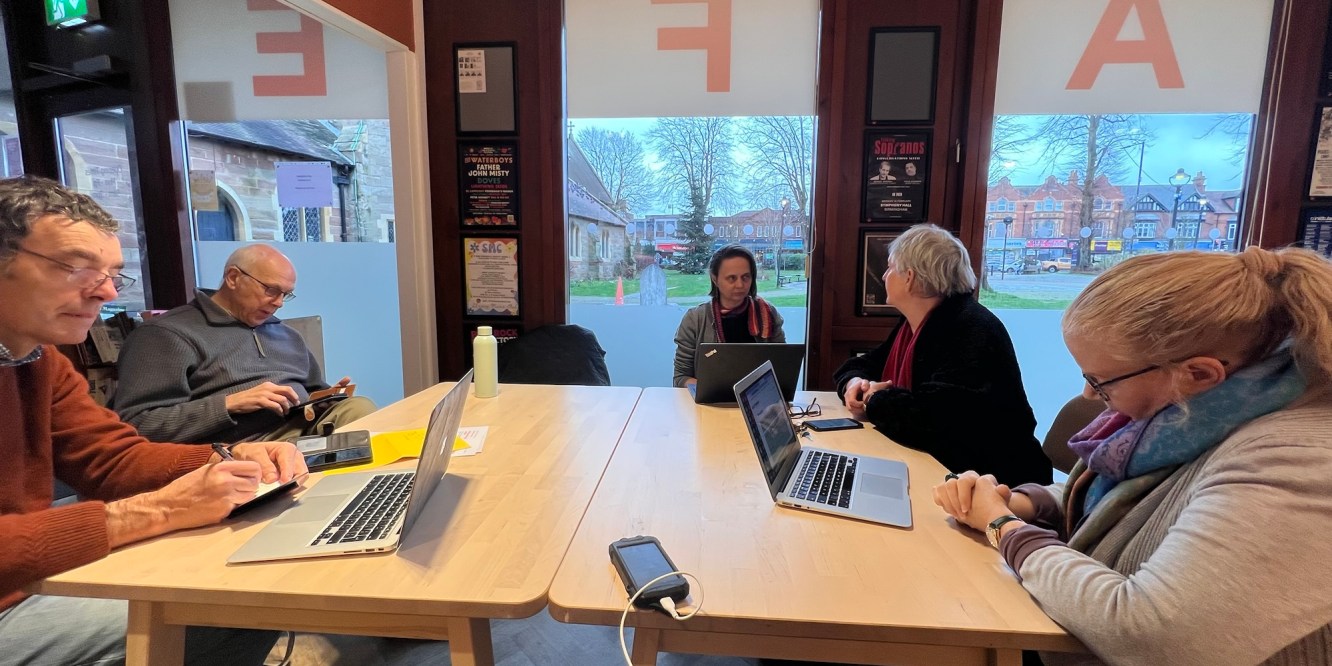
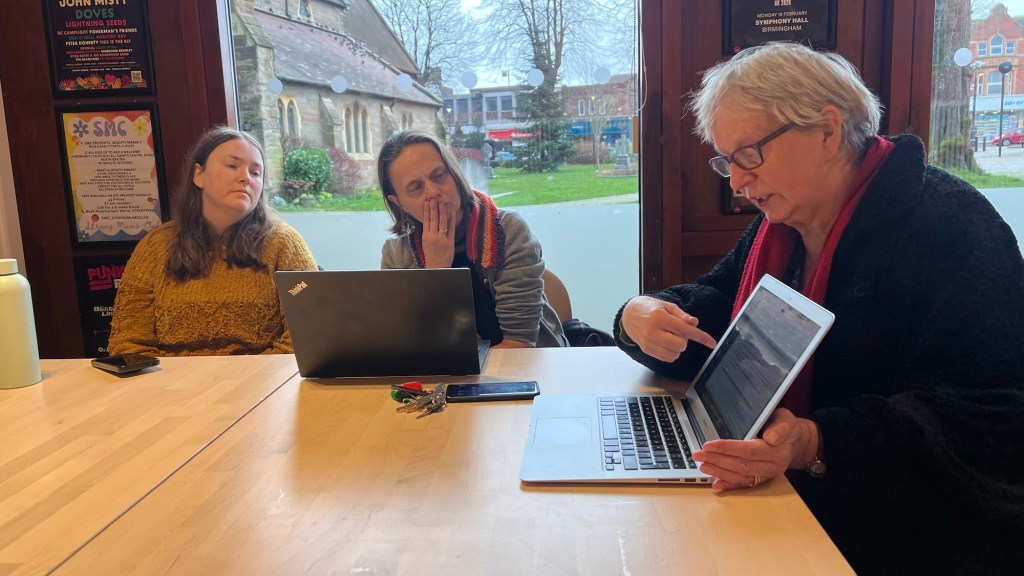
On a damp February Sunday after church a small group of us gathered with laptops to ask ourselves a deceptively simple question, ‘what would it take for All Saints to reach the Silver Eco Church award?’
We already have a strong foundation. Our Green Policy, first adopted in 2019 and due for review in 2024 , sets out a clear commitment: to reduce our environmental impact, to work towards net zero carbon as a church by 2030, (in keeping with the Church of England’s overall commitment) and to weave care for creation through worship, buildings, land, community life and personal lifestyle. But as we quickly discovered, having a policy and achieving Silver are not quite the same thing.
The Eco Church framework developed by A Rocha is both encouraging and exacting. It divides our common life into five areas — Worship and Teaching; Buildings and Energy; Land and Nature; Community and Global Engagement; and Lifestyle — and asks detailed, practical questions in each. The Land and Nature section alone runs to pages of specific actions and evidence. E.g. Do we manage mowing to encourage wildflowers? Do we avoid peat? Are we monitoring biodiversity? Are we engaging in citizen science? It is less about warm intentions and more about demonstrable practice.
So our first step has been to organise ourselves around those five areas. At our Creationtide service back in October we invited the congregation to sign up to the strand that most interested them, particularly if they were interested in being a group leader for one of the five areas. The now well-thumbed sign-up sheet — with its mixture of neat print and hurried scrawl — is a visible sign that this is not a task for a small sub-committee alone, but a whole-church effort. And there were also many imaginative ideas that came out of the interactive service we will be drawing upon. Each group leader will now gather their team before our next leaders’ meeting in April, create an Eco Church online account, and begin working systematically through the survey questions.
At the same time, we are reviewing and updating our Green Policy section by section. The aim is not simply to polish the wording, but to ensure that what we say publicly matches what we are actually doing — and what we are ready to commit to next. Once revised, the updated policy will go to the PCC and, we hope, to the wider church for affirmation. In that way, the Eco Church process becomes not a box-ticking exercise but a tool to shape our planning and priorities.
There is something quietly hopeful about this stage. We are discovering that the Silver award is not primarily about prestige. It is about clarity. The methodology helps us see where we are already faithful, where we need to grow, and how our environmental concern connects with worship, discipleship and mission. In short, it is helping us learn how to live out our calling as a church community to care for God’s creation — all of us together, practically and with purpose.
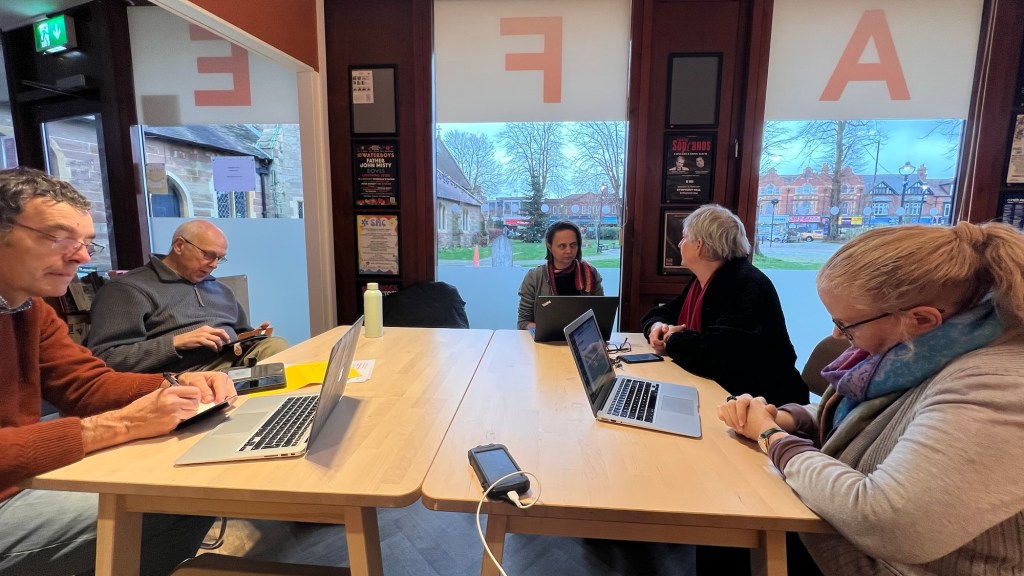
At the meeting, a key question from a team member shifted the emphasis of our discussion. ‘Is this about a policy, or is it about a creed?’, one of us asked. This distinction is a vital one – one that brings vitality – or life. A policy can sit in a filing cabinet. A creed lives in the heart, shapes behaviour, and has the capacity to call a community to action.
Seeing Our Half-Acre Anew
Another pivotal moment for us came not from a survey, but from a map. As we pored over the campus site plan of our church and the shared All Saints Community Development Centre (ASCDC) land, a realisation dawned. We looked at the map and realised we have half an acre in the middle of Kings Heath. How should we really be using it?
The half-acre is our shared ‘sacred soil.’ It’s a tangible space where theological commitment meets practical ecology. The questions tumbled out: Could we plant a wildlife garden? Build bug hotels with the youth group or the Robin Centre? Could we even, dig a pond for biodiversity—and perhaps for a baptism?
This shift from seeing land as a problem to manage to a living system to nurture is at the heart of our ‘creed.’ It moves us from a mentality of control to one of collaboration—with nature, with our community partners, and across the generations in our congregation.
‘How do we get there?’ Ambition meets Real-World Pigeons and Rats
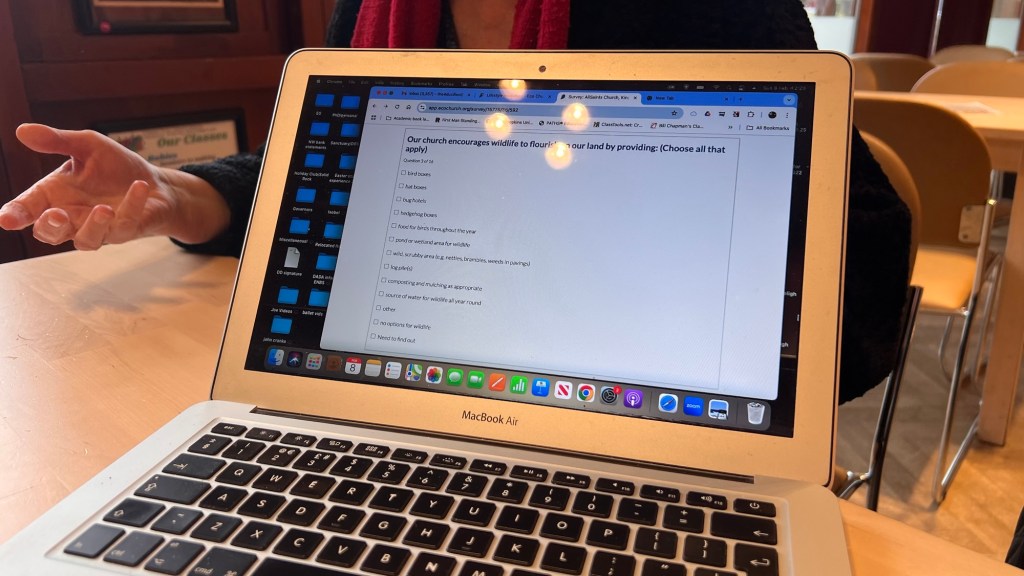
The path from intention to action is where joy and challenge, practicality and aspiration, collide. Our working groups—focused on Worship & Teaching, Buildings & Energy, Land & Nature, Community Engagement, and Lifestyle— we hope will be using the EcoChurch survey not as a test for conformity, but as a catalyst for creative conversation. The survey questions provoke practical and sometimes amusing observations. One section asks if we encourage wildlife. ‘Well, we have rats and pigeons’, someone noted ironically.
A lively discussion ensued about eco-friendly rat elimination, culminating in the whimsical suggestion. ‘Do we need a church cat?’ It was a moment of laughter that also held a serious point: How do we care for our space in a way that is truly in harmony with all of creation, pests included?
We are also navigating the beautiful complexity of shared space. Our church shares its grounds with the ASCDC, (All Saints Centre Development Company) the charity responsible for managing our vibrant community hub. This was set up by the PCC (Parish Church Council), twenty five years ago as part of an ambitious long term project that has only recently been completed – with a newly purpose built Robin centre – a Day Centre for those with dementia – amongst many other improvements.
As the first stage of the church’s original vision, the historic vicarage was demolished and a new village square for the community created on the high street. For various reasons, ASCDC was set up as an independent charity independent of the PCC’s control, to run the community centre that was built adjacent to it to provide services to the community.
So does our “creed” of care extend to their buildings and operations? The consensus was a resounding, ambitious ‘yes.’ While our direct control may be limited, our influence—through partnership, advocacy, and shared vision—is not. As one member put it, ‘The spirit of it is that we should be collaborating… we really should be looking at the whole site.’ The Silver level, we reminded ourselves, is about clear plans, but also aspirations.
The Deeper Well: Purpose and En-joy-ment
Throughout the meeting, a crucial theme surfaced, the work should aim to be joyful and life-giving. ‘If it’s just a formal, bureaucratic thing,’ one person reflected, ‘we’ve missed the mark.’
So we are intentionally asking: How does this effort give people a sense of purpose, joy and contentment?
The vision is of intergenerational days gardening days, services held in a newly wildflower-filled square – the satisfaction of seeing we are doing ecologically our best the one small patch of the planet we are responsible for.
An eco-theological work in progress
We are still at the beginning. Each of our group leaders is to convene a meeting with people who have expressed interest in their area – before 12th April 2026, which will be the next Ecochurch leaders meeting
We are not aiming for a perfect, photogenic, instagrammable eco-project. We are just a normal parish, with an old, demanding building and limited time, we may aspire to live out a creed of care with ambition, but we hope this is balanced by humility and grace. As one member wisely cautioned. We look to the example of others, like St. Christopher’s, Springfield, but remember to ‘have grace in our midst, as well as ambition.’
Every church context is different but our story, documented here, we hope, will resonate with, inspire assist, and provide practical examples to other churches on our path. The Silver Award is our immediate goal, but the true destination is a community that can honestly say: We believe God’s creation is sacred. We believe our half-acre matters. And from that belief, we are finding the joy to act.
All Saints Church, Kings Heath is documenting its journey toward the Eco Church Silver Award. To follow progress, find resources, and share your own community’s story of faith in action, visit the Joy in Enough website.
By Damian J. Hursey and the All Saints Silver Award Committee
 Joy in Enough