

There’s something quietly radical about asking a simple question: what can we do with the land we already have?
You may remember a few weeks back I reported upon at the first gathering of the All Saints’ Arocha Silver Award Committee.
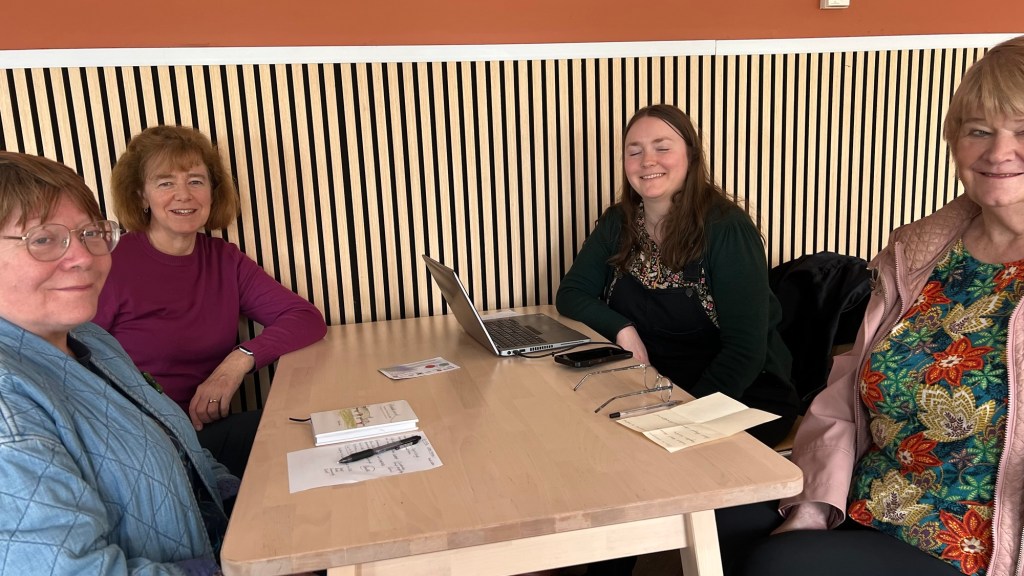
Accordingly, a couple of weeks ago, the Land and Nature sub group met for the first time, a group of five of us from the church community who came together with an interest in land and nature on the site, in a spirit of curiosity and, I suppose, what might be described as appreciative enquiry.
Appropriately enough, our discussion on land and nature was not an abstract or global one, but focussed upon what we could do, right where we were, on our patch of ground. As mentioned in the last article, this is a patch of ground the church shares with a café, community centre, and a number of local groups and charities in the All Saints’ Church Centre. The aim, we realised, was to begin a conversation with those who already worked on the land around the church, to observe, to listen, and, only then, to envision – we had a shared instinct to pause and ask: what’s already happening?
A gardening group is already at work during the week, for example. There are partnerships with community organisations. There’s a youth project with enthusiasm, a lunch club, and a café producing a steady stream of organic waste. There is, in other words, a hidden web of people and practices that is already doing some of the work we are seeking to accomplish in improving the way our land and nature is used.
Rather than imposing a new structure, we recognised the importance of mapping these relationships. Who is already tending the land? Who holds knowledge about what is being done and why? Who might want to be involved, even if they can’t attend meetings? This can be slow work. But it is also the kind of work that prevents well-meaning projects from becoming disconnected or duplicative.
The Power of Local Action
One participant spoke about a growing movement within environmentalism represented by the Climate Majority Movement – a shift toward local, practical action. Not instead of systemic change, but alongside it. The idea is simple – do what you can, where you are. And there was a sense that this particular place might hold more potential than first assumed. ‘We’ve got more land than we think,’ someone noted. Even a modest space, if tended intentionally, can become a site of biodiversity, nourishment, and community connection. It’s about accumulation – small acts that, together, reshape how land is used and valued.
Compost, Coffee Grounds, and Circular Thinking
Some of our most immediate ideas were also the most tangible. What if the waste from the café – coffee grounds, tea bags, food scraps – could be composted on-site? What if paper from Sunday services could be shredded and added to the heap? What if that compost then nourished flower beds or vegetable plots? There were practical suggestions too, water butts to collect rainwater, reducing reliance on mains supply; simple compost systems that could grow over time; even the possibility of involving multiple groups in maintaining and using these resources. None of this is revolutionary. But together, it begins to form a pattern of living that is attentive, frugal, and creative – all hallmarks of joy in enough.
Growing Food, Growing Community
The conversation soon turned to growing things. Could unused areas of land be transformed into spaces for vegetables or flowers? Could produce be used in the café, creating a small but meaningful ‘plot to plate’ cycle? Could flowers grown on-site be used in worship? These ideas weren’t just about sustainability. They were about participation. Involving young people, drawing on the knowledge of older members, creating opportunities for shared activity.
There was also recognition that expertise exists beyond the church. Local organisations, such as the Stirchley Fruit and Nut village, NAF community garden, and other horticultural groups could offer guidance, support, and inspiration. The invitation, then, is not to reinvent everything from scratch, but to join a wider network of people already experimenting with ways of living more lightly upon the earth.
Worship, Tradition, and the Land
As the conversation unfolded, something deeper began to emerge: the connection between land and worship. What might it look like to bring the outdoors more intentionally into the life of the church? Not just as a backdrop, but as a participant?
There were suggestions of holding services outside, of physically gathering on the land being discussed. The ancient practice of Rogation – walking the boundaries and blessing the land – was mentioned as a possible inspiration.
Even small shifts in tradition were considered. Where do the palm crosses used on Palm Sunday come from? Could swiftly regrowing locally sourced greenery, such as pussy willow, be used instead? (This is actually a practice of the medieval church.) These questions, though modest, could open up wider reflections on global supply chains, ecological impact, and the tacit meanings embedded in our practices.
Challenges, Realities, Warts and All
We were under no illusion that this would be entirely straightforward. There are practical challenges, unclear responsibilities for different parts of the site, the need to coordinate with multiple stakeholders, and even ‘everyday’ issues like pests. There are limits on time and energy. Not everyone can commit equally. But there was also a shared commitment to honesty. This isn’t about presenting a perfect model. It’s about experimenting, learning, and being willing to show the process we’ve been through, ‘warts and all’, hoping that others might find it helpful.
First Steps: Listening Before Doing
By the end of the conversation, a clear starting point had emerged. Before launching new initiatives, the group would:
- Speak with those already caring for the land
- Connect with partner organisations on the site
- Map existing activities and relationships
- Invite input from a wider circle, including those unable to attend meetings
In other words, the first step is not action, but attention.
A Quiet Beginning
Nothing definitive was decided in our first meeting. No grand project was launched. And yet, something important had begun. We had gathered to ask what it might mean to do better ecologically with our small piece of land. We had shared knowledge, raised questions, and imagined possibilities.
We had resisted the urge to rush ahead, choosing instead to root our efforts in relationship and reality. In a world that often equates change with scale and speed, this kind of beginning can feel almost insignificant. But perhaps this is how transformation often starts – not with sweeping solutions – but with a handful of people, a patch of ground, and a willingness to see both differently.

By Damian J. Hursey and the All Saints Land and Nature Committee
 Joy in Enough