
© Amnesty International
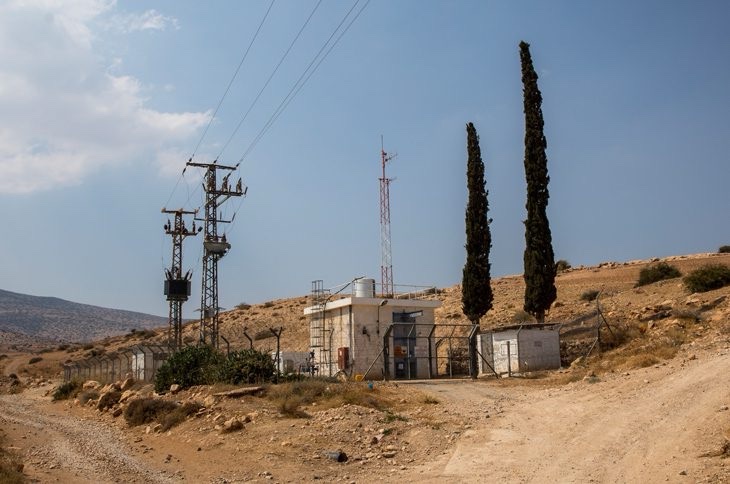
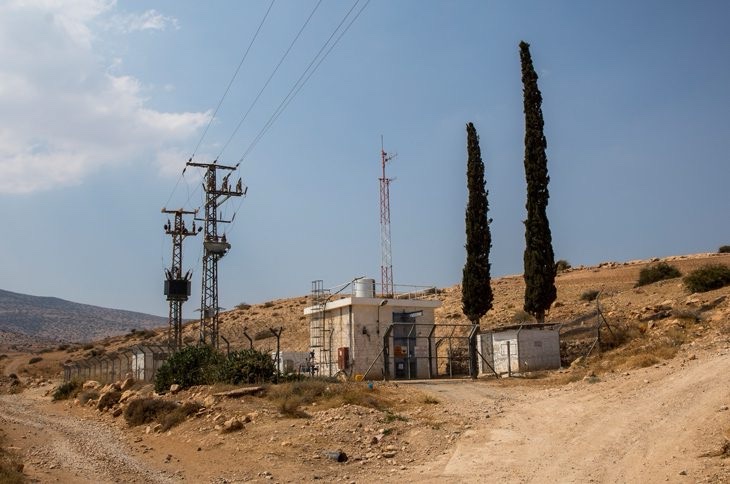
The Jordan valley is a little way from Nablus, but the situation with water is the same throughout the West Bank. The tapping of the springs, and the redirection of the water is the reason why the River Jordan is now not much more than the width of Birmingham’s River Rea, and the Sea of Galilee is shrinking.
Meanwhile in Gaza, the people are desperate for clean water. They should have plenty as there is an aquifer there too, but it is polluted from seawater and sewage, due to decades of Israeli blocking of supplies needed to manage the water supply properly.
In Exodus 17: 1-7, we see the wandering Hebrews, led by Moses, desperate for water. In these verses and on the mural on the disused pumping station, separated by about 3 millenia, we see the theme, universal throughout human history, that water is essential for life. The author of the Exodus passage probably lived in the northern kingdom in the region of Shechem, and so will have seen water springing from rocky ground. When, as we see in John, Jesus requests water from the well it is a fairly ordinary daily event, except that from the pen of John the ordinary is given weighty meaning.
In the first half of John’s Gospel, he takes scenes from the life of Jesus and uses them as a peg on which to hang his theology. The scene with Photini is in the full light of noonday, actually a strange time to be collecting water. She is a reviled Samaritan and a woman, but this encounter finishes on a note of hope. Initially we have a conversation about water. In the long exchanges which follow there are a number of theological themes.
In his Lent book ‘Meeting God in John’, David Ford says that the overall theme of this chapter is identity. Who is Jesus? Who are we in relation to Jesus and to each other? At the end of the encounter with the Samaritan woman, the Samaritan villagers answer Ford’s first question, saying that Jesus is ‘the saviour of the world’. Jesus gives the saving living water of eternal life to all people. Surely, if any withhold the water of life, literally or metaphorically, to any of the Father’s children, at any time, they stand under the judgement of God.
The Arabic word for ‘spring of water’ is ‘sabeel’. This hopeful word is the name of the Palestinian Liberation Theology group in Jerusalem, a reference to the beautiful imagery in John 4, as well as what should be a natural feature of Palestine.
As the empire of the west wages what the Bishop of Chelmsford has described as an ‘unjust and illegal war’, we might ask ourselves Ford’s second question of how might we live lives true to Jesus, the saviour of the world, in this context. Omar Haramy of Sabeel Jerusalem suggests the following:
- War causes fear and grieving, which isolates us. This makes discipleship and collective worship all the more urgent. As churches come together and pray together, we centre God, not fear.
- Huge amounts of money are being spent on propaganda to promote false narratives that glorify war. We must learn to recognise and resist the propaganda and falsehood.
- We must stand firm for justice. From the prophets to Jesus, we see injustice challenged. The churches must speak truth to power.
- We must refuse hatred. Christians must resist the categorising of peoples as enemies. We hate the sin, not the sinner.
Sabeel teaches radical Christian non-violence, and is for me a beacon of hope in the face of so much Israeli expansionism, which ignores ecological justice, including the fair distribution of water all over the West Bank. Sabeel’s message of ‘hope where there is no hope’ is truly a spring of living water. For more information about Sabeel see their UK website: www.sabeel-kairos.org.uk
For Mark Cuthbert, springs, streams and rivers are ‘the surface expression of a deeper source’, similarly, Mark says, that all human beings are ‘surface expressions for a deeper source’, what Mark calls ‘a divine outpouring’. This beautiful metaphor also makes a nonsense of boundaries, and speaks to us of worship in the living flow of spirit and truth, which surely expresses itself in a ‘just and equal sharing’ of all that is life-giving on this Earth for all humanity.
Margaret Healey-Pollett, April 2026
 Joy in Enough